
Question 1: How do I want to celebrate this year? Based on my energy and intention.
Completing another trip around the sun has brought a deeper sense of clarity around how I choose to celebrate milestones. Every year I find myself with this dilemma: to celebrate or not to celebrate? I enjoy gathering with people, but the preparation, coordination, and social bandwidth required often demand energy I simply do not always have.
If a birthday is meant to celebrate oneself and one’s life, it should happen on our own terms, right? Not out of obligation or external expectations.
Over time, I have learned to lean into this intuition and explore the energy I truly have. Instead of forcing plans months in advance, I allow myself to wait until very close to the day to check-in with myself and how I feel. Sometimes, celebrating looks like staying at home with my closest loved ones, doing nothing in particular, and parading around the house in pajamas. Other times, it means hosting a gathering. This year, I decided to host a celebration a few days after my actual birthday. Although it required significant effort, sharing space with friends from various chapters of my life was deeply fulfilling. Calculating how much food and drinks to get is still a skill to develop… but I had a lot of fun and I hope people did too.
Another aspect I felt like addressing in what I hope is a wiser stage of life and not just hormonal, was gift-giving. With guests representing around 12 different nationalities, I have noticed a common cultural tendency across borders: people feel a strong expectation to bring a physical gift when invited to a birthday celebration. To relieve this pressure and set clear boundaries, I proactively communicated my specific love languages ahead of time. I explicitly shared how I receive and experience love, clarifying that none of those ways involve material objects. My hope is that this allowed for guests to show up comfortably, knowing that their presence and meaningful connections were the true source of happiness for me.
Question 2: Will this thing make me happy? Examining my relationship to material goods.
Material gifts are not inherently bad. Rather, we all perceive and value them through unique personal filters. In my experience, our emotional connection to physical presents is heavily shaped by two primary factors:
- Current financial situation: How we feel about material items often correlates with our current financial security. When money is tight or we are experiencing financial constraints, receiving a desired item we cannot afford for ourselves feels deeply impactful. In times of abundance, however, physical items may become less relevant and impact us minimally.
- Childhood experiences and love languages: The ways love was demonstrated in our formative years shape how we receive it today. In many households, the ritual of receiving, unwrapping, or asking for specific gifts on occasions forms a core emotional blueprint. If gifts were a primary vehicle for affection growing up, receiving physical presents remains a powerful love language in our adult years.
Using frameworks like Gary Chapman’s 5 Love Languages helped me explore my own experiences (I have learned about this framework from others, but never read the material myself). In my invitation, I explicitly shared that quality time, physical touch and words of affirmation were my primary love languages, assuring guests that simply showing up, sharing a good hug, and being present was the best gift they could offer.
Even with clear boundaries, guests still generously brought tokens like flowers and chocolates. While I deeply valued their intention, receiving these items highlighted my own emotional relationship with material goods. Cut flowers, for example, make me feel both appreciation and a mild sorrow. Watching the plastic go to waste and the blooms fade after a few days, make me feel sad. The joy they bring is real, but fleeting. In contrast, seeing friends from one part of my world meet another one, their kids running around my house, taking part of a deep conversation in a corner or laughing at a joke in the other are experiences that stay with me much longer. Certain material items can have the same impact, but it takes a lot of practice, observation and intention to give the right type of material things that will have a lasting impact. Most of us don’t have that skill.
Question 3: Can money actually buy happiness? Basic needs and happiness fundamentals.
This leads to a question that constantly circulates in our societies: Can money buy us happiness?
We often equate money with material possessions, and while there is nothing wrong with feeling true joy from physical things, for most of us, that happiness is short-lived if we have no one to share it with. Even if that person is ourselves, since having the ability to enjoy ourselves and being present with who we are is sometimes more powerful than being surrounded by tons of people and still feeling lonely.
Listening to a recent webinar exploring sociological research on this topic of money and happiness left me with two fundamental insights:
- When money relieves survival stress, it absolutely boosts happiness: If you are living under financial constraint, struggling with debt, or unable to cover fundamental needs, having access to money to satisfy those needs will definitely make you happier.
- But beyond the fundamentals, money only amplifies what is already there: Once basic needs and financial security are met, additional wealth tends to make happier only those who are already happy. If core emotional health or human connection is missing, more money acts as a temporary patch rather than a solution.
Building financial security (learning to invest, saving intentionally, and increasing income) is a worthy pursuit. However, it is truly powerful when done in parallel with investing in your emotional health, your inner peace, and your human relationships. Those connections remain the foundational pillar of our happiness and overall well-being.
As I step into 41, these are my core reflections.
I wish for you the same clarity, intentionality, and rich human connection that I felt celebrating this year.
Maria 🌺
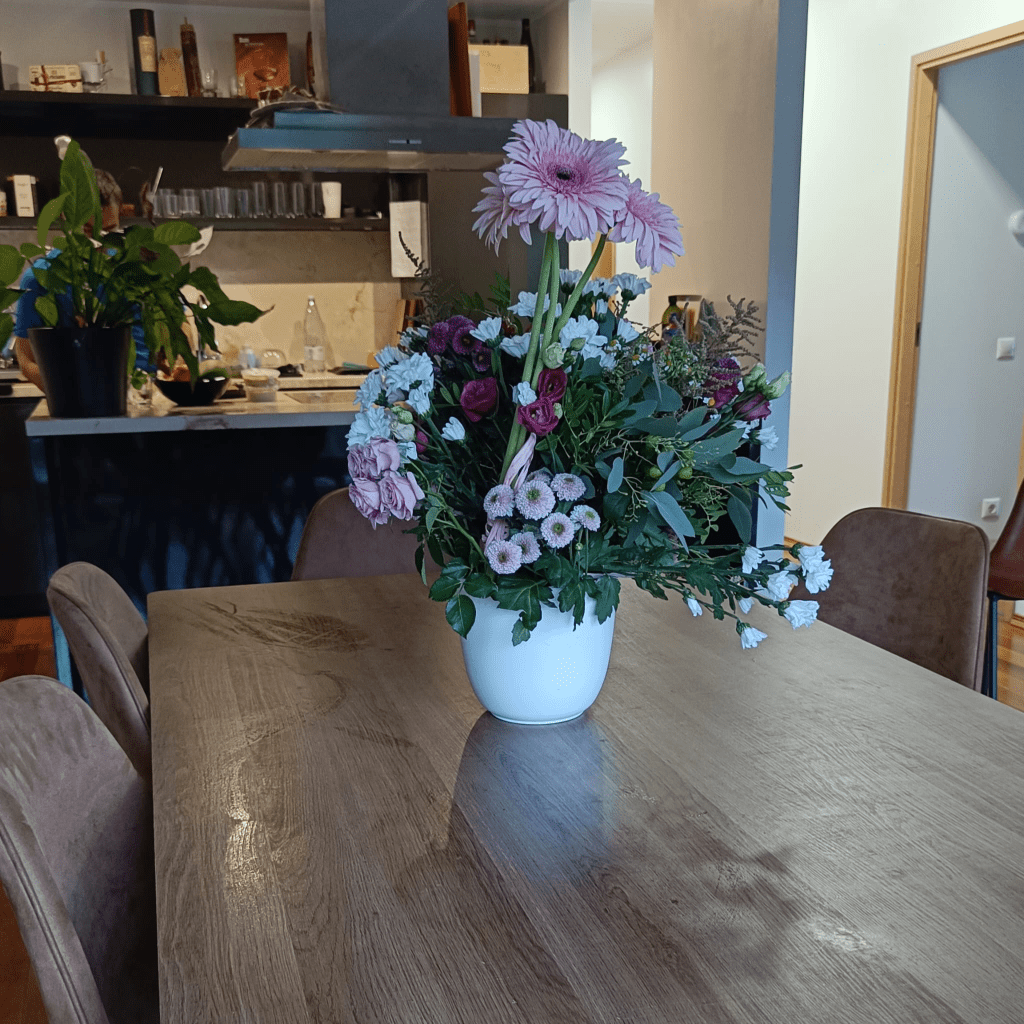
A bouquet of bouquets
Discover more from Maria Lasprilla
Subscribe to get the latest posts sent to your email.


Leave a Reply