
Back in 2010 I was a vegetarian and I often complained about how hard it was to find tasty places to eat out that were not just potatoes and mushrooms or a big chunk of fried cheese to wildly age my then younger heart. Attempting to ease my pain, a colleague from those years recommended not just the place, but this very specific dish: Saag Paneer from this particular restaurant. Mind you, I was an “ovo lacto vegetarian” (I know, it sounds cocky but we wanted to be precise) so I could have dairy which is at the core of this dish.
As soon as I tried it, it was love at first try. I used to live about 2 houses from the place so I made it a habit to eat there once or twice a month. It was a treat. Expensive for my then low teacher salary, but so worth it.
Years later after having moved to another part of town, I found myself ordering this dish every Friday for several weeks in a row during stressful periods at work. This had become my favorite go-to comfort food so I was happy to pay the delivery fee on top of what was already a pricey but worthy dish.
When family visited I took them there. They loved the place, they loved the dish. There was a time I had a colleague from India and we worked close to the restaurant, so we would have their daily dishes almost every day. Having something other than that the saag paneer was a good experience, but it the dish was a great experience.
At this point, the dish had not only become a favourite one for me. It had taken on a new role: it was my monitor to measure price increases over time.
You see, when I first started eating it back in 2010 the dish was about 7,50 euros which was considered pricey when compared to a daily lunch which back then could cost you 4-5 euros, about 70-80% more. Mind you, the place and dish where the type you went to for a special dinner date or a business meeting.
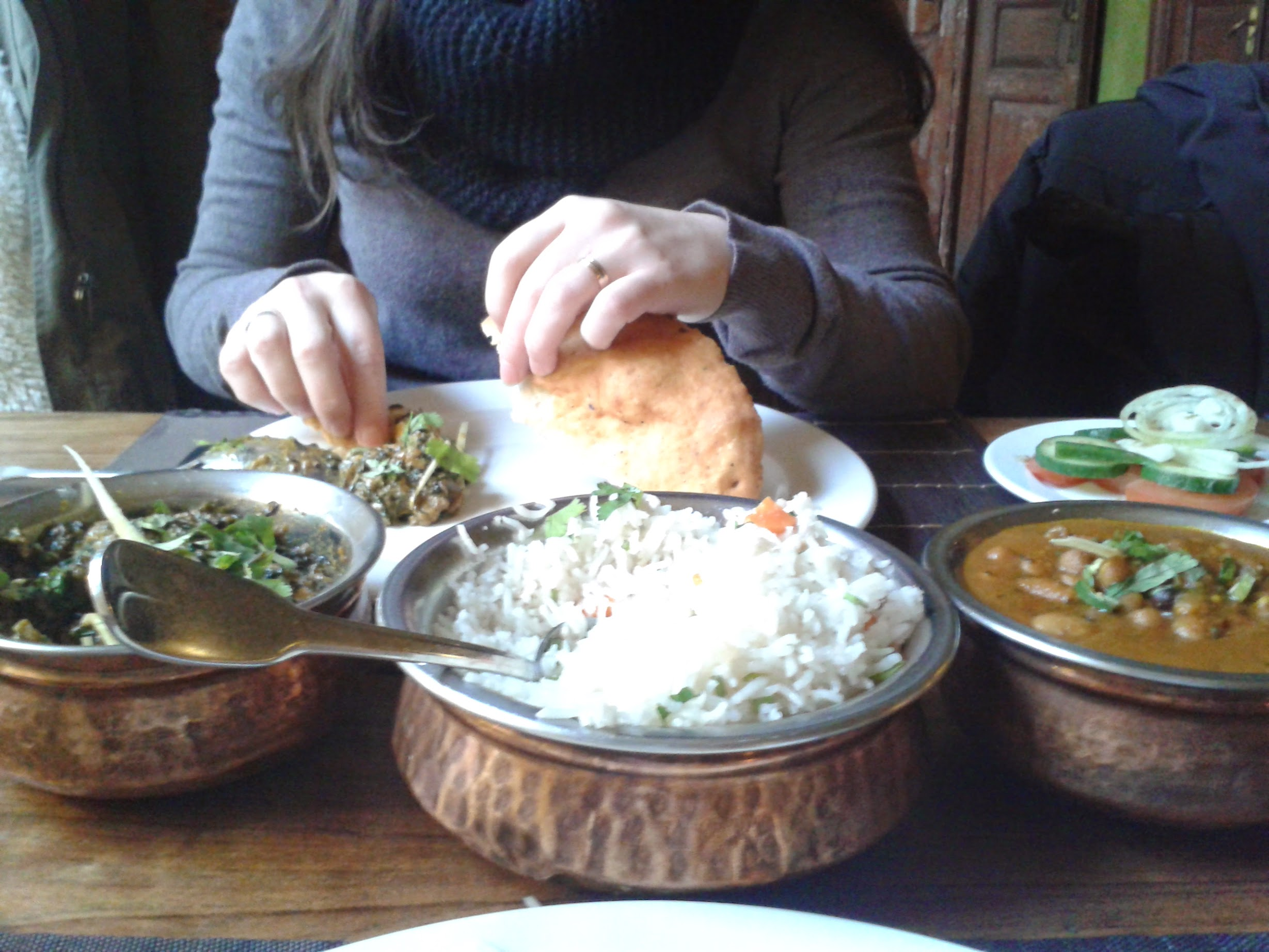
To put it in perspective, the price included a generous bowl of the main dish (saag paneer), accompanied by basmati rice, a snack-like salad and batura bread. I was usually unable to finish it all so I would share it with the hubby or take some home. But at one point I became so addicted that I would overeat until it became a habit to finish it no matter what.
Over the years, naturally, the price increased. A bit first, to about 8 euros. Then a bit more to 9,50 eur. I remember paying 11-12 euros for some years until it eventually reached 13,50 euros. But then the price change was not enough. In the last 5 years I have noticed the most drastic changes which, in my eyes, are the reflection of a business trying to survive in constantly trying times. You see, the quality has never ever decreased. I have always gone there knowing exactly what I was going to get and I get it every time. This level of consistency is remarkable. After so many years of having the same high quality experience I started fearing one day it would disappear. I even attempted cooking this at home but, of course, it wasn’t the same.
I can’t tell exactly when, but for a while now the price started excluding the extras. It went down from 13,50 to 13, but now the bread, the rice, the salad were all things to order as separate additions. And now I went there recently and I can’t even pick batura from the extras anymore. For the first time in 16 years I had my saag paneer with chapati. Luckily for me, the dish was as delicious as ever and I enjoyed every single bite.
But what I could not stop thinking about was how the price and the menu restructures had changed over the years, and what these were signs of a business owner making sure they not only survive but keep offering good quality products and experience to their customers.
When I add up the extras I used to order in 2010 for 7,50 euros I now get a total of 21,5. That is 13 for the main dish, 2,5 eur for the salad, 2,5 euro for the bread and 3,5 for the basmati rice. That is almost a 3x increase. If you put that number in the menu, people would not buy it.
In most financial education materials out there the talk is that inflation is somewhere between 3-4% year over year. We learn about investing as a way to keep up with these changes so that our money does not lose value so drastically and we can keep our life styles. But this price increase reflects an almost 7% increase over year and that is the same percentage we hear about when looking at average market gains. But I am sure most of these price increases were market effects from the last 5 years or so when we have had an accelerated set of events that would normally take place over a longer time.
My conclusions? Prices will change, as a famous class speech goes. Sometimes reasonably, sometimes in ridiculous ways where a shitty burger with a coke will cost you 18 euros and provide 1/3 of the experience that my saag paneer does. I don’t want to become the grumpy old person that just complains about changes without trying to understand the complexities driving them.
Financial education is still needed, investing is necessary. But like I like saying to my mentees: it is not about getting rich, it is about avoiding poverty. Not being able to eat my saag paneer in the future might not be a sign of poverty, but how the prices affect my grocery, electricity and transportation bills definitely will be.
Happy Friday,
Maria 🌺
Discover more from Maria Lasprilla
Subscribe to get the latest posts sent to your email.


Leave a Reply